Why Revision Surgeries Are Increasing as Younger Patients Choose Joint Replacement
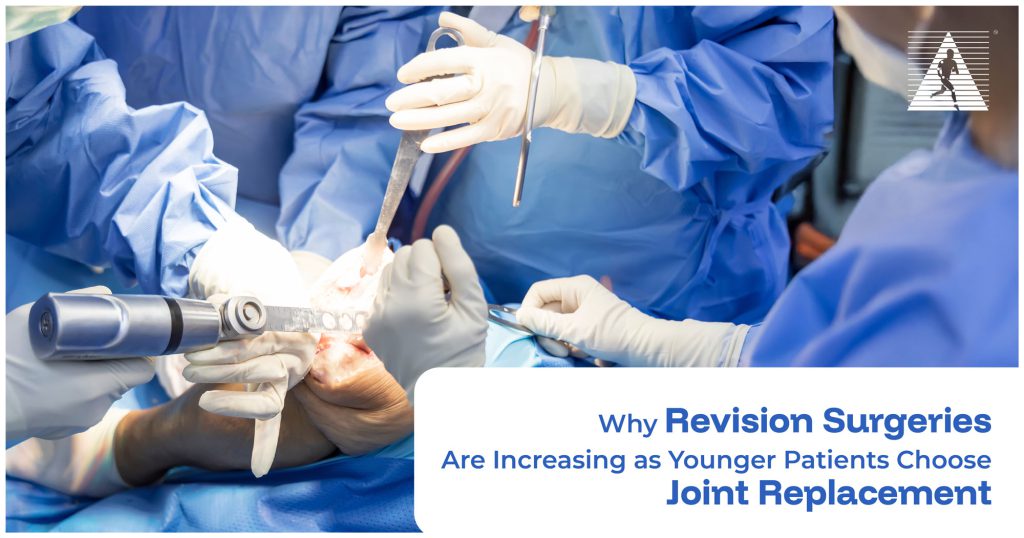
Joint replacement surgery has become one of the most successful procedures in modern medicine, offering significant pain relief and restoring mobility for patients with severe joint damage. Because of these positive outcomes, an increasing number of younger and more active patients are now considering joint replacement procedures.
However, an important long-term consideration must be understood.
Artificial joints, although highly durable, are not permanent. Over time, implants may gradually wear down, loosen, or lose their optimal function. This is particularly relevant for younger individuals who remain physically active for many years following surgery.
When an existing implant requires replacement or repair, surgeons perform what is known as revision joint surgery.
Revision procedures are typically more complex than the initial joint replacement for several reasons:
- The existing implant must be carefully removed
- Bone quality may have changed over time
- Additional reconstruction or bone grafting may sometimes be required
For this reason, long-term joint care becomes essential after joint replacement surgery.
Patients can help protect their implants by:
- Maintaining a healthy body weight
- Following recommended rehabilitation programs
- Following recommended rehabilitation programs
- Attending regular orthopaedic follow-up visits
Advances in implant design and materials have significantly improved durability, and many modern implants now last 15 to 25 years or even longer.
Nevertheless, younger patients should approach joint replacement with a long-term perspective and work closely with their orthopaedic surgeon to achieve the best possible outcomes.
Latest Posts
-

Robotics and Its Impact on Post-Surgical Recovery
April 5, 2026 -

Mind–Body Rehabilitation: Why Recovery Is Not Only Physical
March 25, 2026



Leave a Reply